Business Waste Removal Chelsea: Recycling and Sustainability
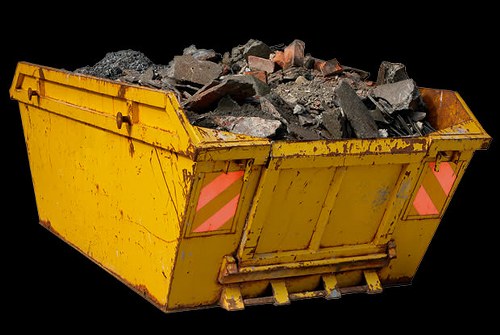 Business Waste Removal Chelsea is committed to creating an eco-friendly waste disposal area for every commercial client across the borough. We combine practical on-site measures with strategic partnerships so that your Chelsea premises can actively reduce landfill, increase resource recovery and promote a sustainable rubbish area for staff, visitors and neighbours. Our approach balances regulatory compliance with a clear environmental mission: to turn waste into value wherever possible.
Our service model for business waste removal in Chelsea focuses on real-world outcomes: fewer mixed waste consignments, more segregated streams, and tighter route planning. These operational steps are backed by investment in staff training and visible signage that helps teams separate paper, cardboard, glass, food and mixed recycling at source. The Royal Borough and adjacent London boroughs encourage separate food and dry recycling collections, and we work in step with that local approach to maximize diversion from landfill.
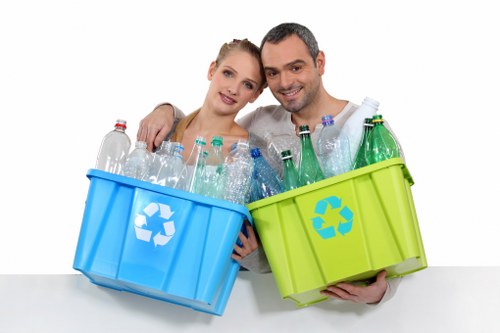 We maintain an explicit recycling percentage target for our Chelsea commercial accounts: a staged ambition to achieve a 70% recycling and reuse rate across our managed contracts by 2030, with interim milestones (50% by 2026). That target is monitored monthly and reported internally so managers can see which sites need support, additional segregation bins or bespoke collections. Achieving higher recycling percentages not only benefits the environment but also helps businesses demonstrate corporate responsibility.
Practical Infrastructure: Transfer Stations and Collections
To deliver a credible eco-friendly waste disposal area we use authorised local transfer stations and approved consolidation points. Collections from Chelsea are routed to nearby West London transfer stations and authorised facilities that specialize in sorting and onward processing. Routing to these local transfer stations reduces haulage miles and ensures recyclable loads are processed by operators with strong recovery credentials.
Our logistics emphasize efficiency: scheduled collections, consolidated loads and use of local transfer hubs to avoid unnecessary long-distance movements. This reduces carbon intensity and speeds up material recovery. When materials are sorted at transfer stations they enter material-specific supply chains — paper, cardboard, glass, plastics and organics are kept separate to maximize recycling and reuse opportunities.
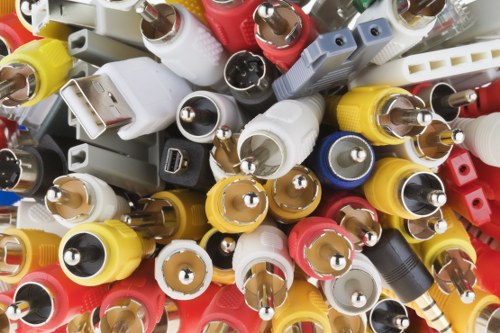 We support a variety of recycling activities suited to the Chelsea and Kensington context, including separate glass and mixed dry recycling, food waste captures for anaerobic digestion, and secure data-bearing equipment recycling for offices. These tailored services reflect the boroughs' practical approach to waste separation and help businesses comply with local environmental policies while improving sustainability outcomes.
Partnerships with Charities and Reuse Networks
One of the most effective ways to create a sustainable rubbish area is to divert reusable items to charity partners. We maintain active relationships with local charities, furniture reuse organisations and social enterprises that accept quality office furniture, fixtures, white goods and reusable supplies. Donating serviceable items reduces disposal volumes and supports community programmes.
Our charity partnerships include scheduled collections for re-useable goods and ad-hoc collections for larger office clearances. Items that cannot be reused by charities are evaluated for refurbishment or processed through accredited reuse centres. We ensure all donations meet safety and hygiene standards so partner organisations can accept and redistribute goods with confidence.
Benefits of these partnerships include:
- Reduced landfill through reuse and refurbishment;
- Social value delivered to local communities;
- Transparent tracking of diverted items for corporate reporting.
 Low-Carbon Fleet and Route Optimization are central to lowering the carbon footprint of Chelsea business waste collections. Our fleet includes hybrid and electric vans where operationally feasible, and all vehicles use telematics and route optimization software to minimize empty running and idling. These measures support our low-carbon delivery promise for commercial waste removal Chelsea businesses rely on.
Small operational changes — such as consolidated loading, right-sized vehicles for narrow Chelsea streets, and off-peak collections to avoid congestion — meaningfully reduce emissions. We audit vehicle usage regularly and reinvest in cleaner vehicles as technology and infrastructure evolve. For sites with high-frequency collections we recommend alternative collection patterns and bin configurations that reduce overall vehicle movements.
The sustainability program also includes on-site education: staff briefings, signage and easy-to-follow waste flow charts that empower teams to maintain a sustainable rubbish area. Behavioural change is as important as infrastructure; even a well-equipped waste area will underperform without consistent segregation practices.
 Reporting, Compliance and Continuous Improvement
We provide regular environmental reporting that shows recycling rates, diversion volumes and carbon estimates for collections in Chelsea. These reports are designed to support internal sustainability targets and external ESG disclosures. Our continuous improvement cycle uses data from transfer stations and charity partners to refine waste streams and improve capture rates.
In summary, Chelsea businesses choosing our services benefit from: a measurable recycling percentage target, access to local transfer stations, strategic charity partnerships, and a modern low-carbon fleet. Together, these elements create a resilient, compliant and genuinely eco-friendly waste disposal area that keeps resources in use and reduces environmental impact.
